
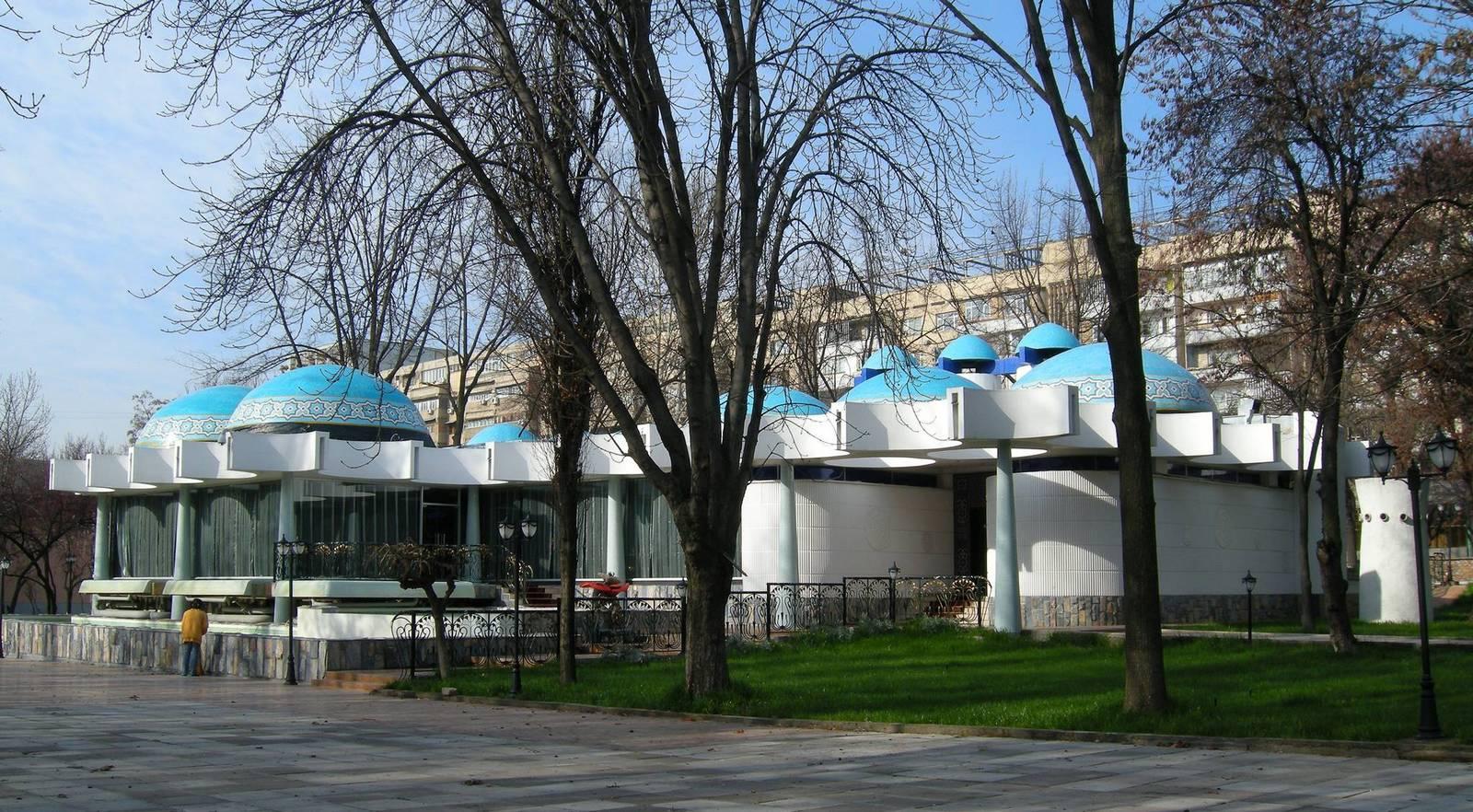
The café, opened in 1970, was built according to the design of architect Vili Islamovich Muratov, engineer Ye. Platsman, and artist A. Kedrin. Immediately after opening, it became extremely popular — every Tashkent resident knew about it, even those who had never been inside.
The café is located on a boulevard that
locals, in honour of the café, simply call “Blue Domes”.
Architecture historian Boris Chukhovich
writes in The Black and Red Book of 20th-Century Architecture of Uzbekistan:
“The emblematic building of Tashkent, the ‘Blue Domes’ café marked a turning
point in the development of modernism in Uzbekistan, shifting to direct
quotations from historical architecture. Although it received mixed reactions
from the professional community after construction, the building nevertheless
quickly became part of the city’s visual identity.”
The Tashkent Encyclopaedia describes the
café as follows: “The core of the composition is the winter hall, to which
vestibules and auxiliary premises are attached. The summer hall-terrace
completes the composition. The domes resting on slender columns that taper
upwards on a flat roof create a distinctive volumetric-spatial structure.
Traditional decorative techniques of folk architecture were used in the
finishing. The trading hall area is 225 m².”
During the years of independence, the
café was reconstructed while preserving its recognisable appearance.
Over half a century, the blue domes have
become a familiar and iconic symbol of Tashkent — they appear in every photo
album and postcard set about the city. At one time, cigarettes called “Blue
Domes” were even produced.
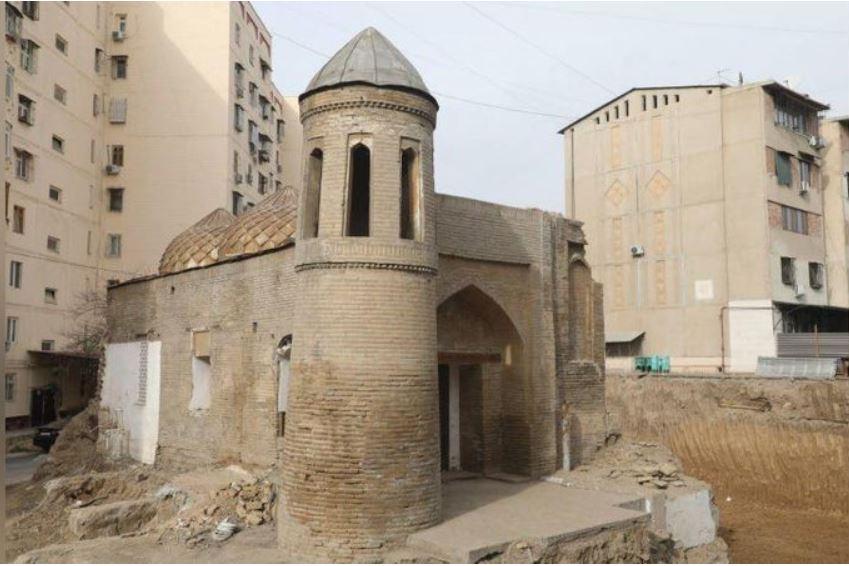
The Baland Mosque was built in 1857. "Baland" means "high," and the mosque received its name from t...
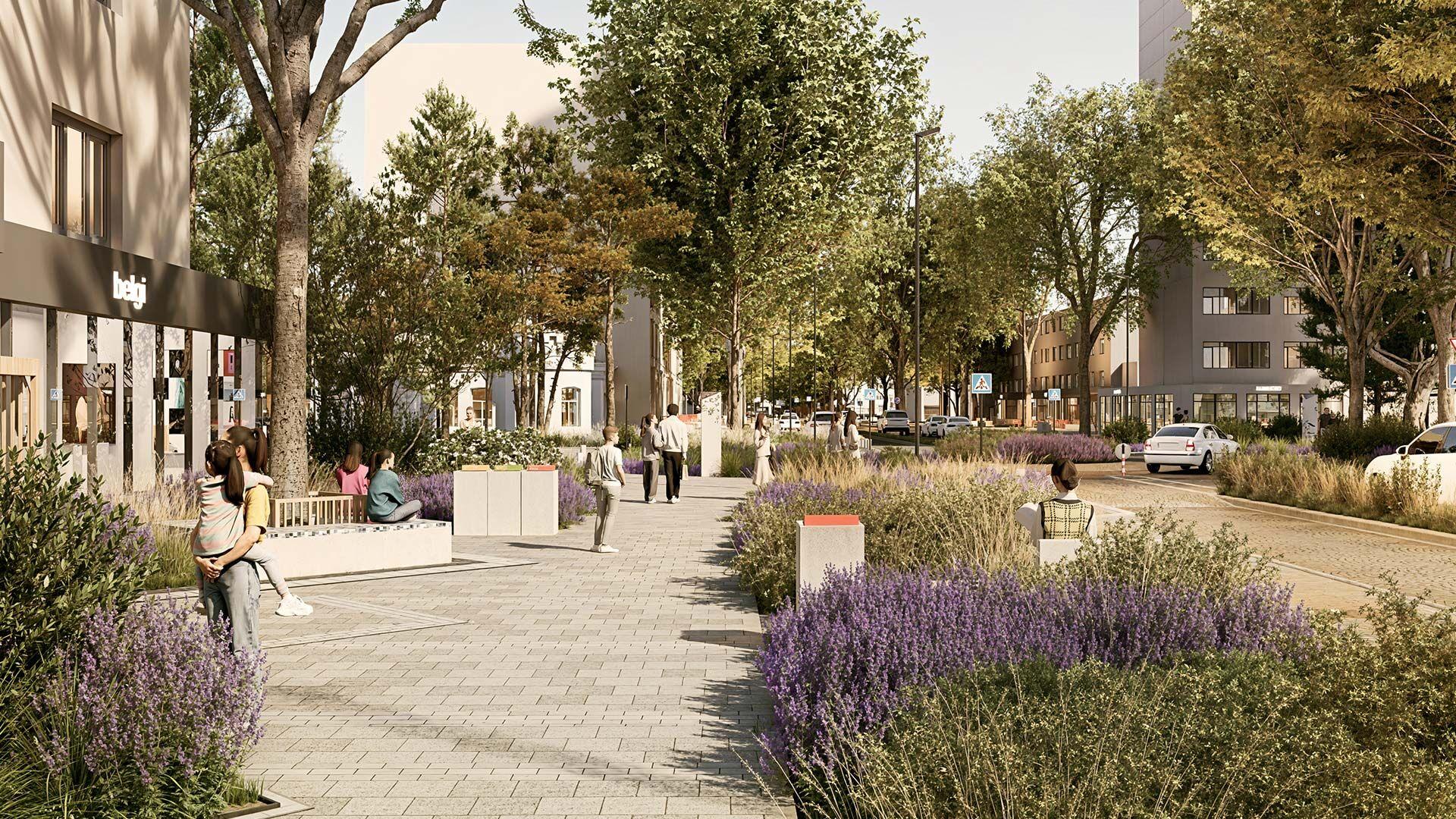
The total length of the street is 2.1 kilometers. All modern conditions have been created here for...
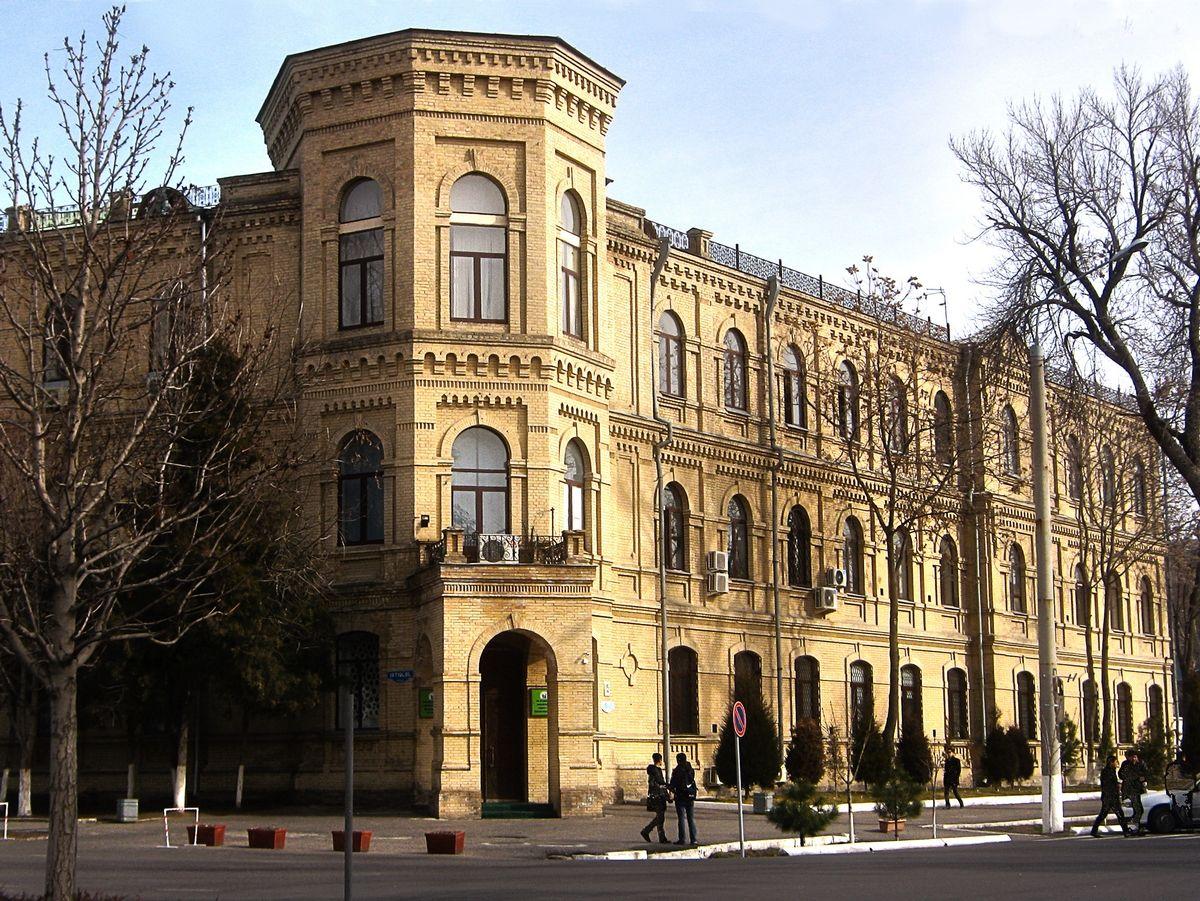
In 1901, the Treasury Chamber received its own building, specially constructed by architect V. S. ...
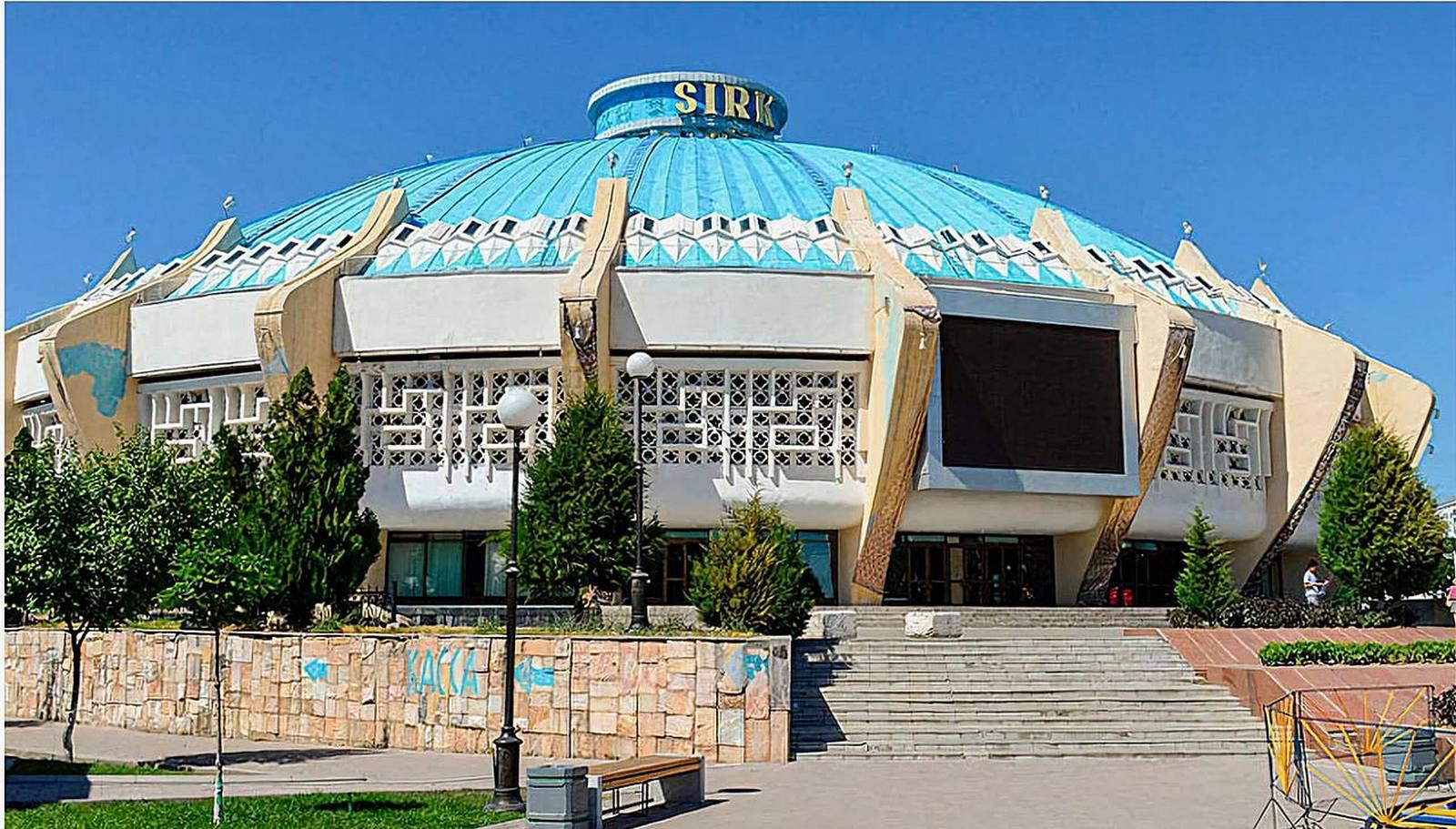
The Tashkent Circus building is one of the most beautiful in the city. It seems to float above the ...