
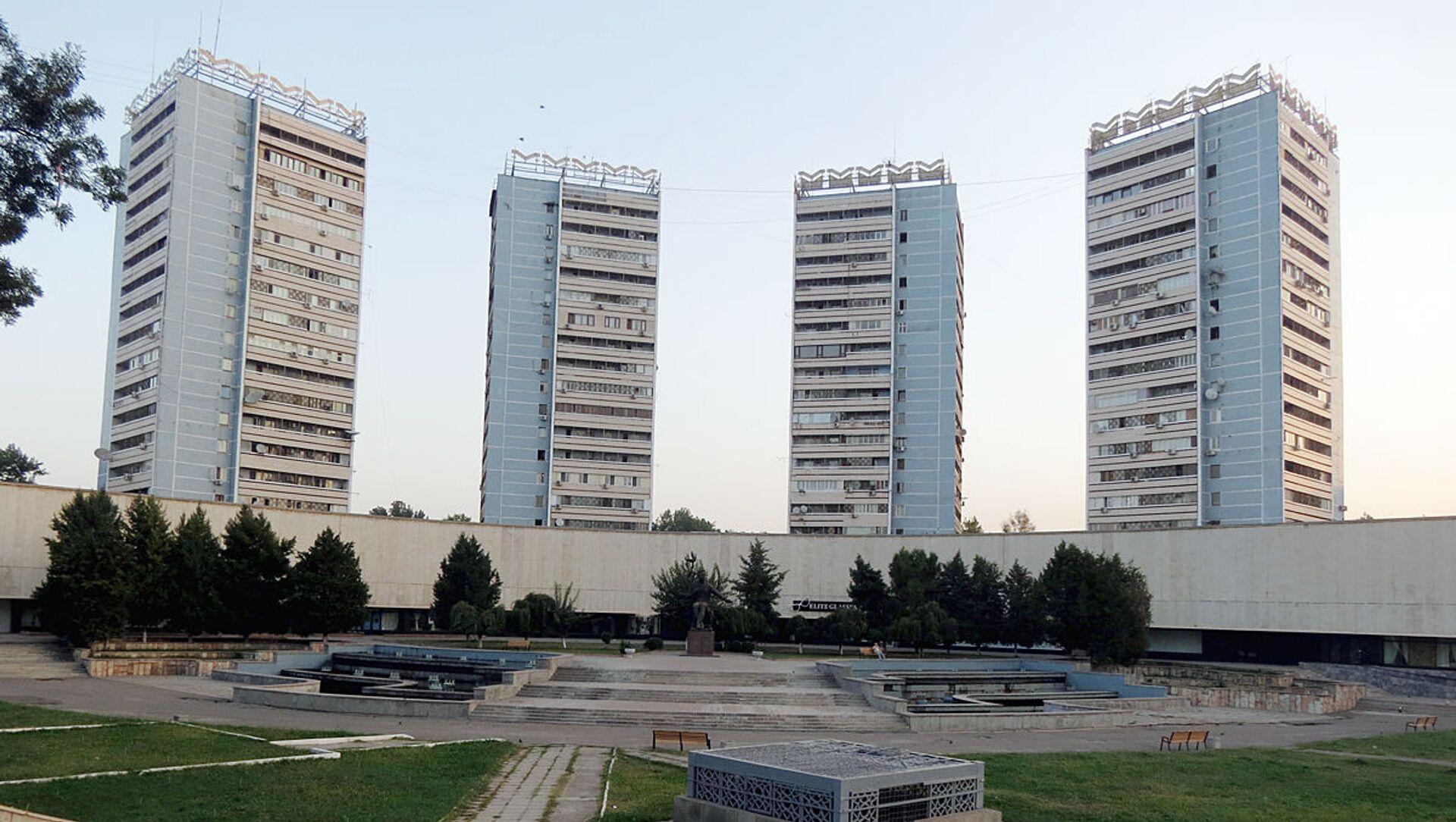
Once, this place was called Asakin Square — a major transport hub and one of the city’s main landmarks. Passenger flows from Vysokovoltny and the center, from Lunacharsky Street, intersected here with the direction to TashMI and Alay Bazaar. Nearby were kindergartens, School No. 18, the Polytechnic Institute, Telman Park, the military enlistment office, a grocery store, a pharmacy, and a hairdresser. The intersection buzzed with traffic and crowds.
In the early 1980s, on the square named after the
poet Hamid Alimjan (often written as Alimzhan), a residential complex of four
high-rise buildings appeared. They are called “eighteen-” or “twenty-story,”
though in fact they have 19 floors — the top, nineteenth, is technical. The
buildings are united in a single arc-shaped composition framing the square. The
lower floors house boutiques, banks, offices, a library, and once — a cinema.
The complex was built by the Moscow “Vysotstroy”
trust under Pavel Sarkisov, taking into account the region’s high seismicity.
The first residents moved in in 1983. Seismic resistance is ensured by a monolithic
elevator block from which rigels extend, supporting the apartment structures.
Most construction materials and equipment were delivered from Moscow.
Hamid Alimjan Square received expressive
architectural design: a monument to the poet, cascading fountains, and an exit
to the eponymous metro station. In 2017, the monument was moved to the Alley of
Writers, where it took its place next to monuments to other poets and writers.
On the western side of the square — from the old
conservatory, beyond Abdulla Qodiriy Avenue — a second similar complex of four
buildings was symmetrically constructed. Thus, the entire square was framed by
eight blue high-rises. While the first four buildings were constructed by
Muscovites, the second group was built by Tashkent specialists from the
“Glavtashkentstroy” trust. Settlement of the second phase was completed in
1990.
In the evenings, the high-rises are beautifully
illuminated, creating a festive glow over the square. Over the decades, they
have become a familiar and recognizable part of the Tashkent landscape — a
distinctive calling card of the capital.
In 2023, an attempt was made to “update” the facades
with aluсobond cladding, but a wave of outrage in blogs and media stopped the
project. However, in 2025, the topic of building renovation returned to the
city’s agenda.

In the mid-19th century, a wealthy Tatar entrepreneur named Sharafbay (Sharafiddin Bay) built a mos...

The architectural complex “Ma’rifat Markazi” (Center of Enlightenment), built on Navoi Street for t...
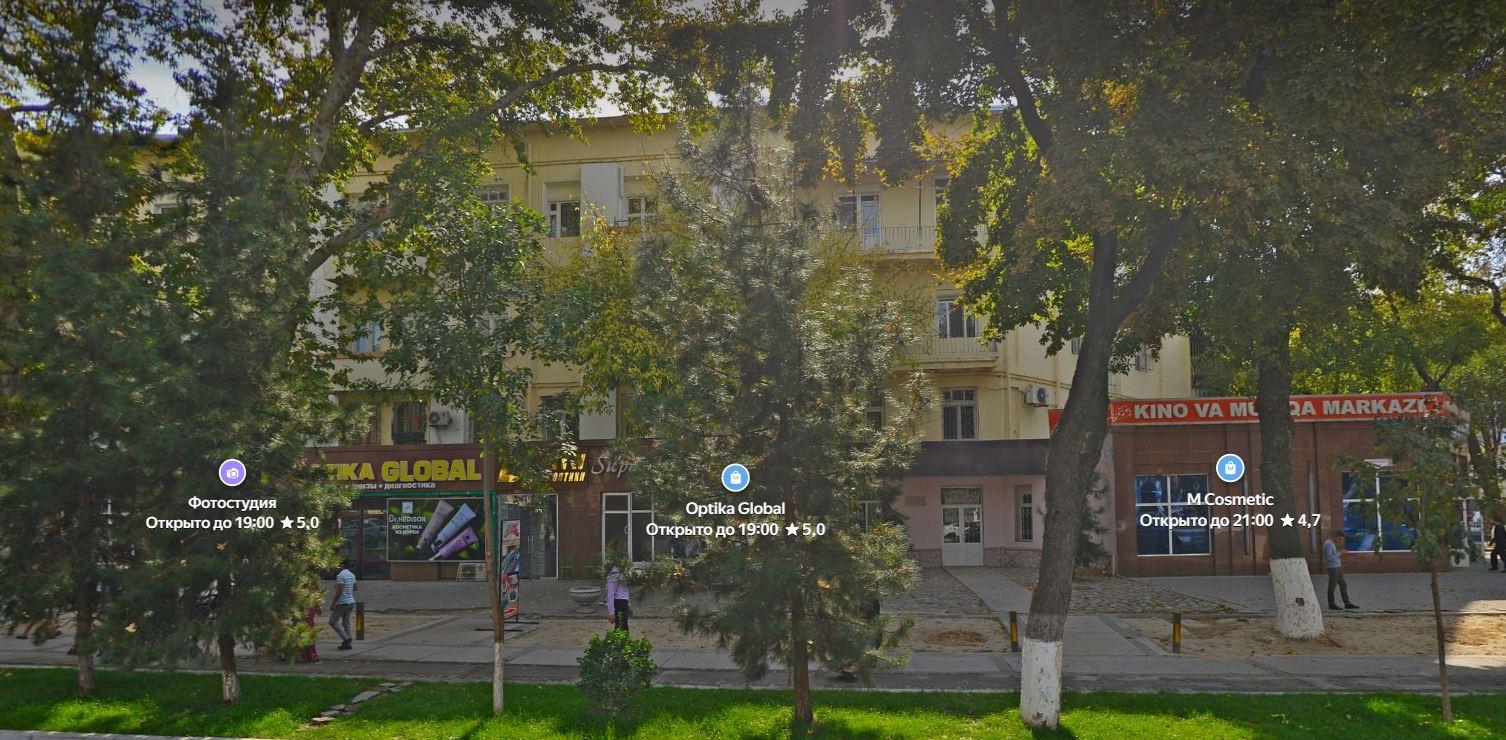
Mutaxassislar uyi Narkomzem loyihasi bo‘yicha 1938 yilda me’mor Pavlov loyihasi asosida qurilgan v...
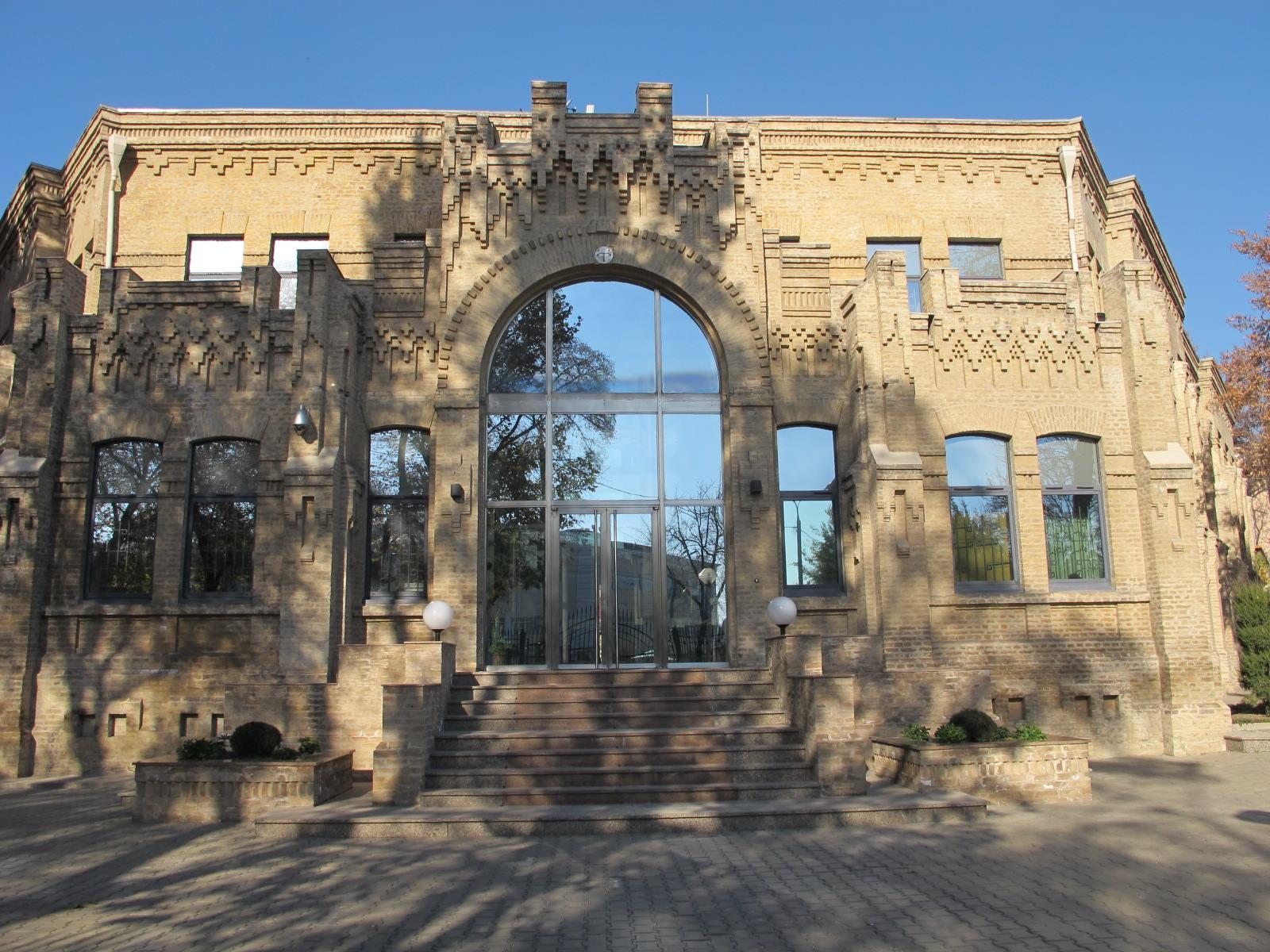
All Tashkent residents notice the French Embassy building located at the corner of Yahyo Gulomov an...