
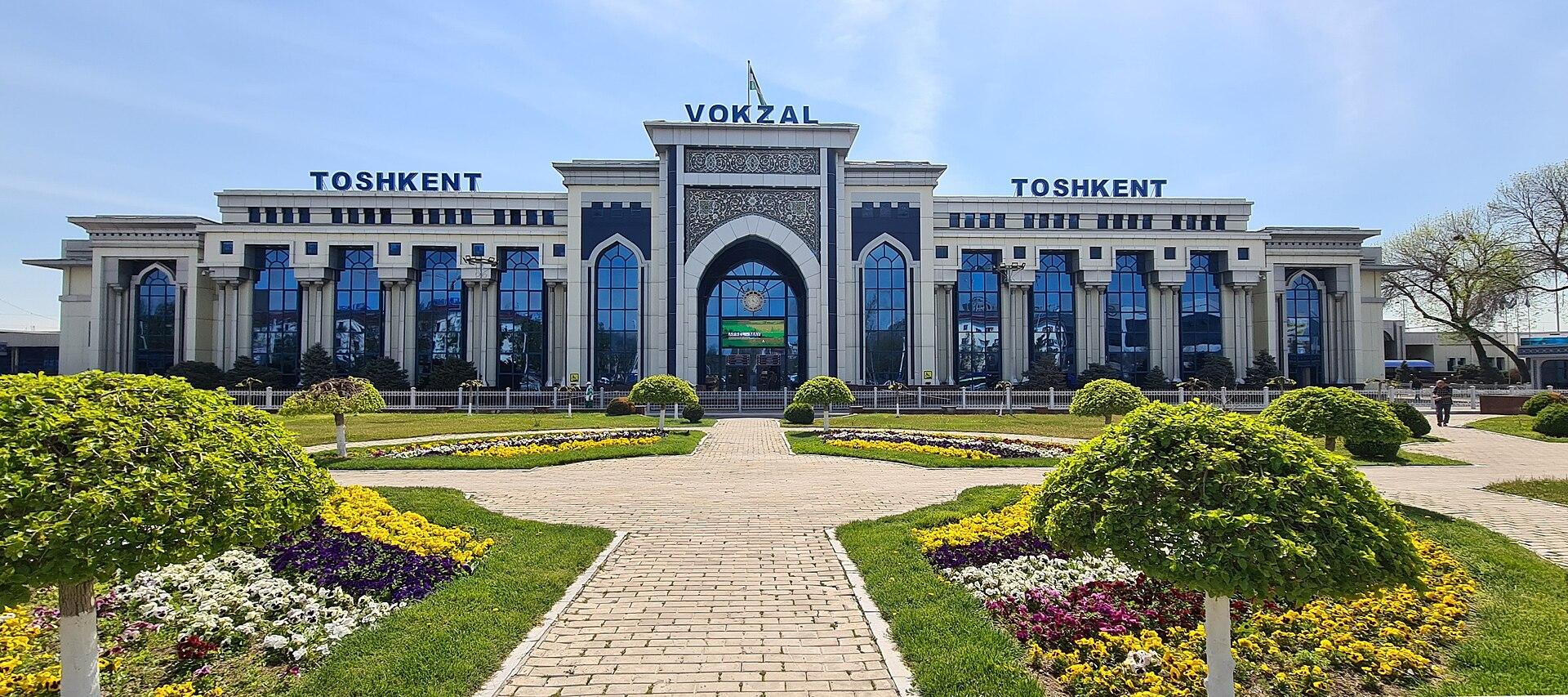
Once upon a time, the Tashkent railway station, built in 1899 to the design of G. Svarichevsky, was considered one of the most beautiful buildings in the city. On May 1, 1899, the Trans-Caspian Railway was extended to Tashkent, linking the south of Turkestan with Baku via a ferry crossing over the Caspian Sea. On January 1, 1906, the Tashkent–Orenburg railway line opened, providing the city with extensive opportunities for trade with Russia and Europe. The station building featured the city’s first large clock.
In 1902, the building was damaged by a
powerful earthquake and was restored three years later. During World War II,
the station received thousands of refugees from frontline areas, many of whom
were initially housed in the station square. The building underwent multiple
reconstructions.
Between 1957 and 1961, it
received a contemporary (for the time) glass-and-concrete design by architects
V. Biryukov, L. Travyanko, and V. Rusanov, as well as engineers K. Kan, D.
Vantannikov, and S. Ryzhov.
The facade, clad in
turquoise tiles, roof canopies, and open inner courtyards reflected local
traditions, while fragments of Svarichevsky’s original building were preserved
inside. This new station can be regarded as one of the earliest examples of
Soviet modernism: the Panoramic Cinema, TSUM, and Chilonzor Shopping Center
would appear only in 1964.
After the 1966 earthquake,
the station was rebuilt while preserving the core idea of functional minimalism
established in the 1957 design. During the years of independence, the building
was altered twice to reflect new trends, leaving virtually nothing of the
brutalist monument of the modernist era.
In 1984, the “Toshkent”
metro station opened next to the railway station. Despite the commissioning of
the Southern Station for local trains, the development of the airport, and
improved road connections, the station—now called the Northern Station—remains
a vital urban transport hub, the main gateway to the capital, and a monument to
the architectural history of Soviet modernism.
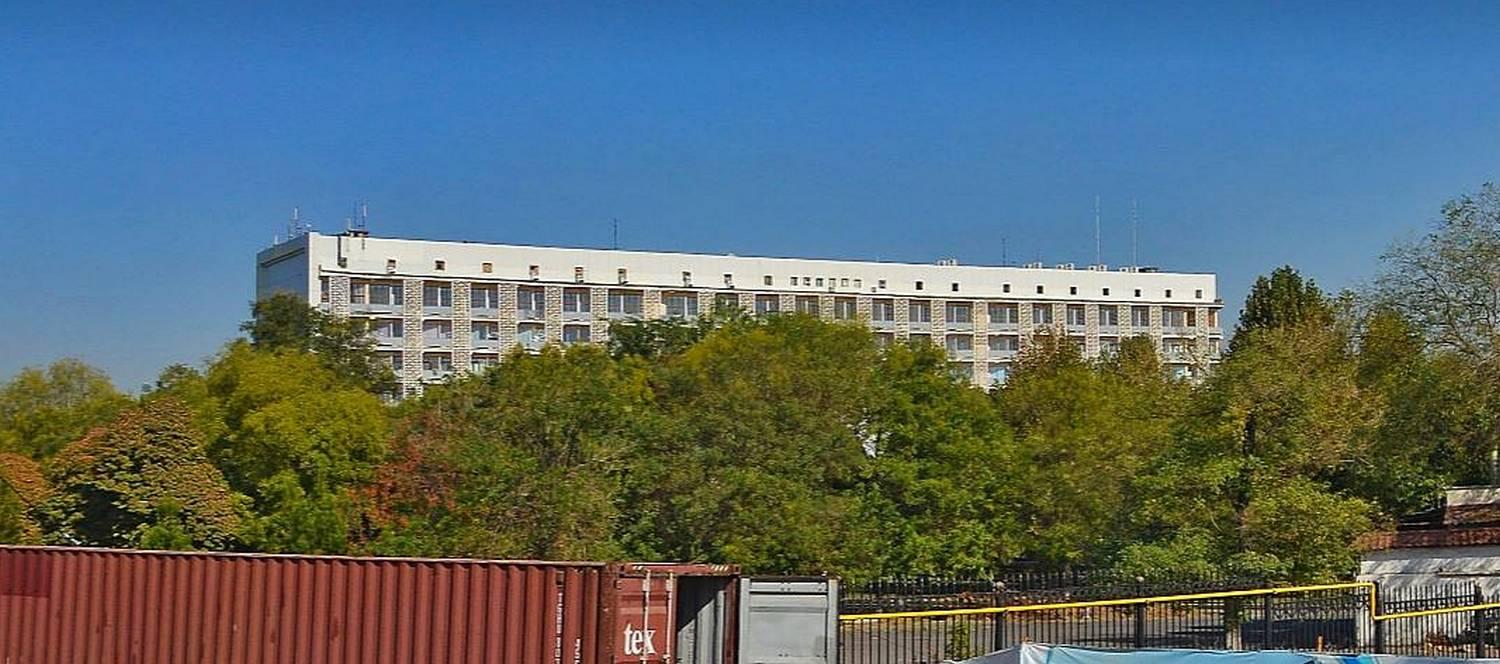
The elongated nine-story building visually “holds” the intersection of ChilanZar Street with the S...
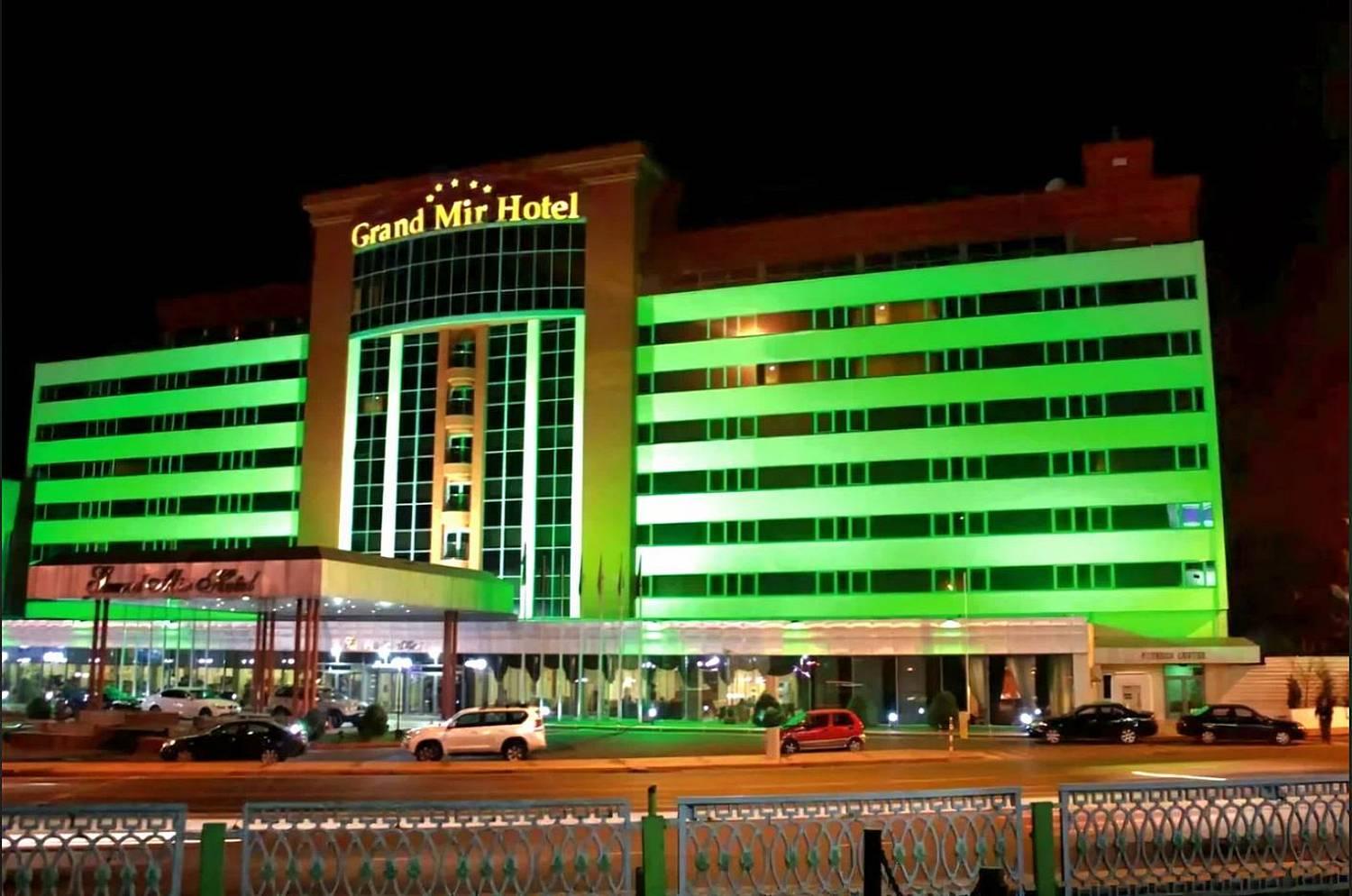
Hotel "Russia" Built in 1965. Architect — V. Muratov; engineers — V. Parshin and A. Ivanova; artis...
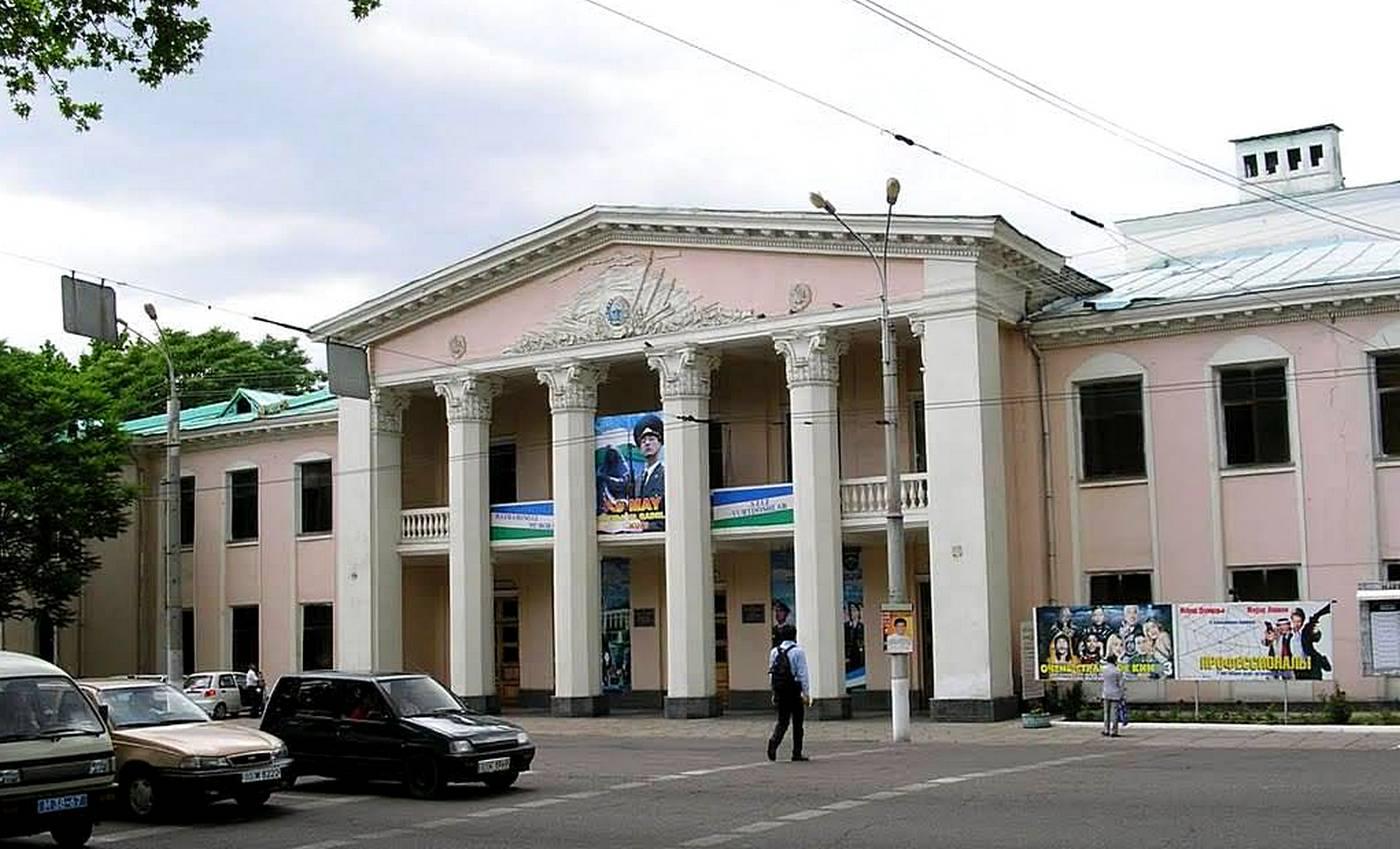
The building for the Military Assembly was constructed in 1885, and its overall appearance has been...
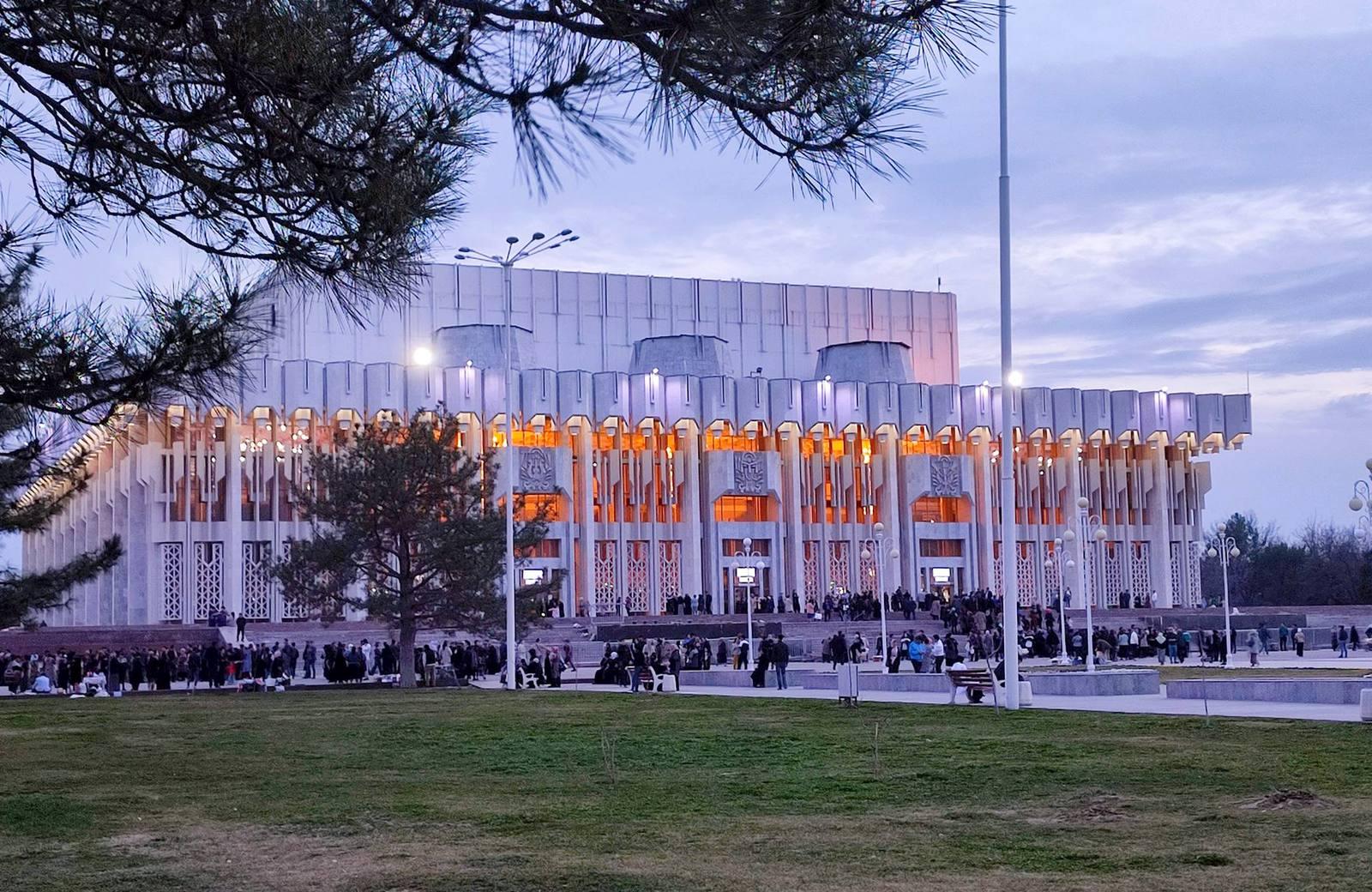
One of the country’s main concert and ceremonial halls, the “Friendship of Peoples” Palace was ope...